8.27.2026
SEASON SUMMER 2026 | COLLECTION DIGITALA Brief History of Clubbing
A Brief History of Clubbing
Michaelangelo Matos
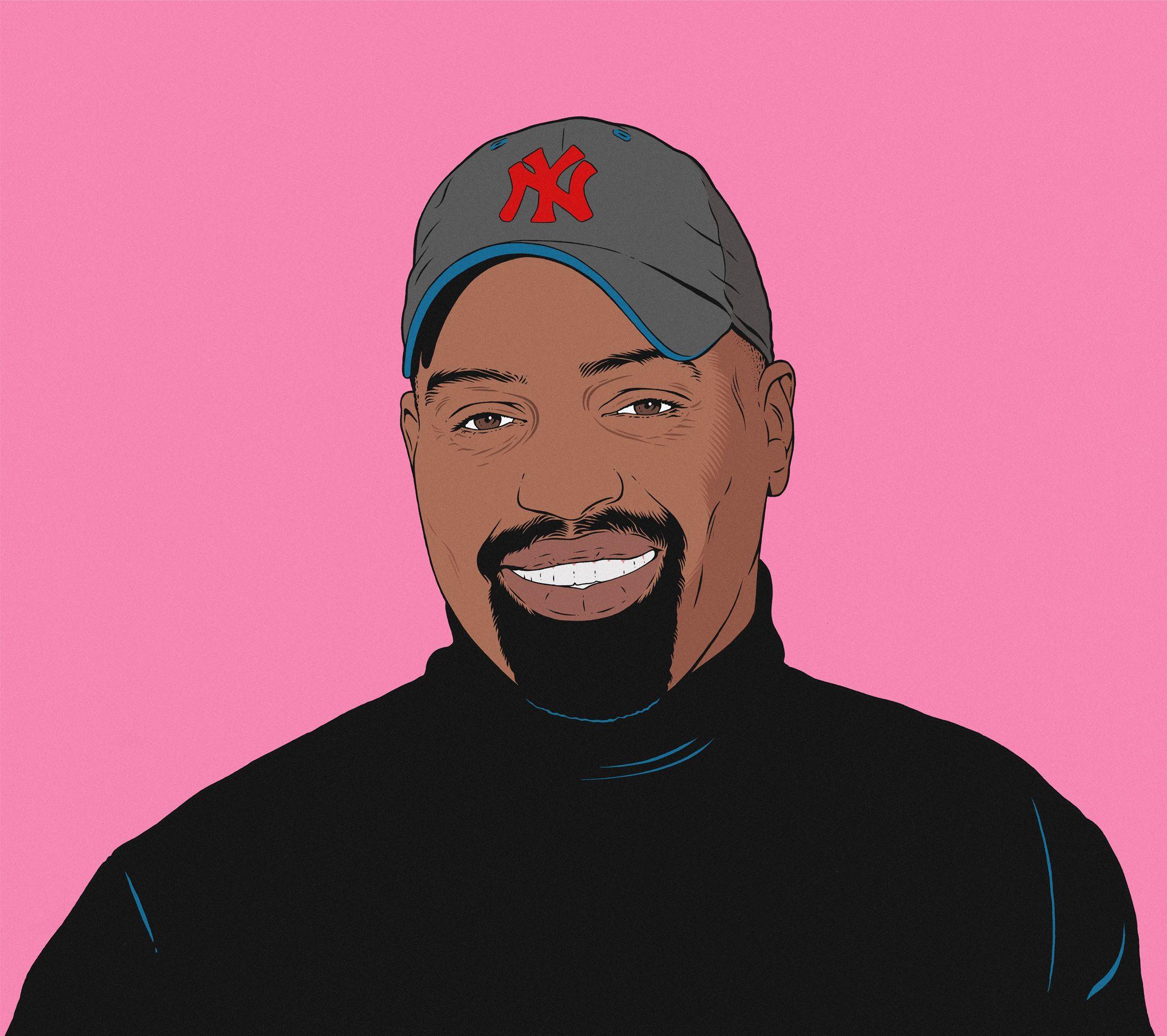
The late, great Frankie Knuckles. Illustrated by Louise Zergaeng Pomeroy.
In the nineties, the dance music audience could be (very) roughly divided into two types: ravers and clubbers. In the post-EDM era, we might amend that slightly to clubbers and festival-goers.
This is not intended as a pejorative but merely as a classification. Festival-goers tend to be younger, more moneyed, and more pop-leaning in their tastes; clubbers tend to be older, more working class, and more oriented toward musical history in their listening. Yes, these are broad generalizations, but what is clear is that, while there is obviously scads of crossover between the two, the trickle often goes from the bigger events to the smaller ones. You see plenty of older heads at bigger events. Much of the time, where you see them is in some professional capacity. But many times, younger party-goers make their way into the clubs, or even raves, where the music is more rooted in old school Chicago house and Detroit techno than in their British bass derivations or faster European variants, as we'll shorthand what goes at the fests.
It's a commonplace now: kandi kids — who wear neon clothes and wildly colored necklaces and bracelets, and dance with glow-sticks — hit events where everybody else is in street clothes — and keep coming back. The people in street clothes, in many cases, once dressed like this themselves, or at least carried glow-sticks.
Let’s go back even further. If we are going by the moment both Chicago house and Detroit techno became known to the wider world, 2025 might count as the fortieth anniversary for both. Of course, both these things go back further than that, but 1985 was a landmark year — when homemade beat tracks from Windy City kids began sprouting up in shops, and also the year Juan Atkins cut his first Model 500 recordings, ushering in the new wave of funky Detroit futurism.
Forty years on, so much of what those artists — from Atkins and his Motor City confreres Derrick May and Kevin Saunderson to Chicagoans such as Frankie Knuckles, Chip E., Marshall Jefferson, and Lil Louis — portended has become a globally recognized mode. Dance tracks that focused on grooves that could be blended together on the decks — not only do people hear this kind of configuration natively in a way that many at the time did not, it has by now become normalized almost unto invisibility. Dance music has become big business, we all know — but it’s also become a common language. Deejaying with and for your friends is the modern equivalent of what passing the guitar around used to be.
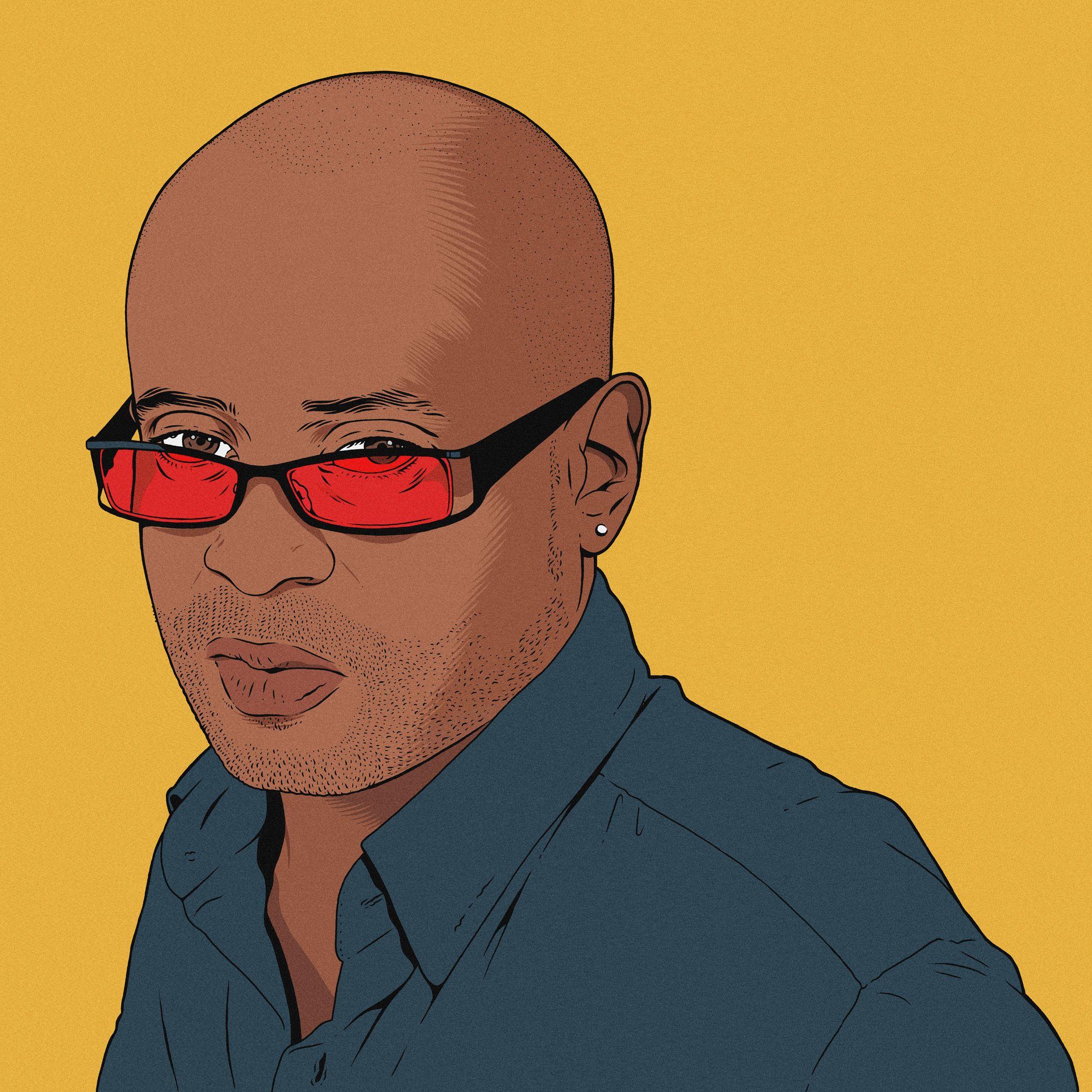
Legendary DJ Juan Atkins, father of Detroit techno, illustrated by Louise Zergaeng Pomeroy.
Just as important is the idea that the DJ’s taste was paramount — that you went to a party because you trusted what you were going to hear. Robert Williams, the founder of both the Warehouse and the Muzic Box, the two defining early Chicago house-music clubs, once explained to 5 Magazine that among party-throwers of his generation, “We knew that the customers would enjoy our music because we knew what to play to them. We were the masters, we were the puppeteers. We kind of programmed them.”
That no-requests remit has evolved even as it has also stayed the same — the promise of rave has always been not only to make you dance to good music, but also to unexpected music, new twists on old samples and unprecedented sonic tricks alike, as well as previously-unheard juxtapositions: Sure, you know Classic X and Classic Y, but you’ve never heard them together before, and once you have, it stays with you forever.
During the late nineties, a warehouse all-nighter in any American city would typically feature a healthy variation of styles. You might encounter, in no particular order: ambient, downtempo/trip-hop, West Coast or Florida breaks, electro, drum & bass, trance, 2-step garage, ghetto house (a smaller subset of Chicago house, its filthy-mouthed low-down grooves were a staple in the Midwest), tech-house, hard acid, psytrance, and gabber — not to mention the many variants on Chicago house and Detroit techno music that had seeded the whole thing to begin with.
Additionally, the rise of the podcast, of streaming platforms like SoundCloud and Mixcloud, and of community radio stations with a large online presence, such as NTS Radio, has boosted both visibility and availability for working DJs, who have more requests for sets than ever. Along with the voluminous ease of digital collecting, this means more of these sets could be individually specialized — a house DJ spinning an hour of drum & bass, a techno jock showing off her jazz collection. Glow-sticks or no glow-sticks, the lesson remains the same — the party rises and falls on the DJ’s taste.