An Interview with Jonathan Lethem
An Interview with Jonathan Lethem
Debbie Way
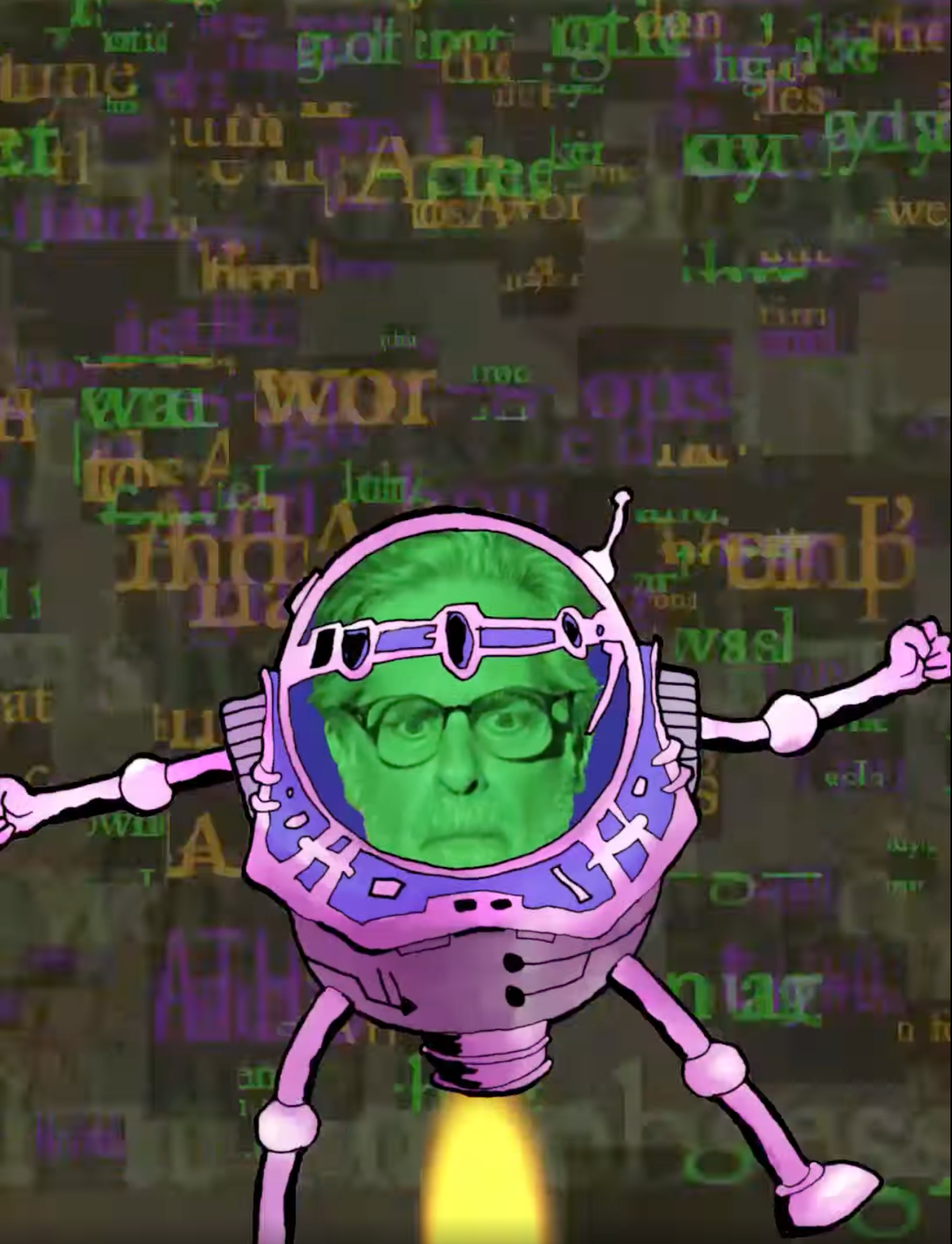
Collage by Debbie Way with image courtesy of Jonathan Lethem.
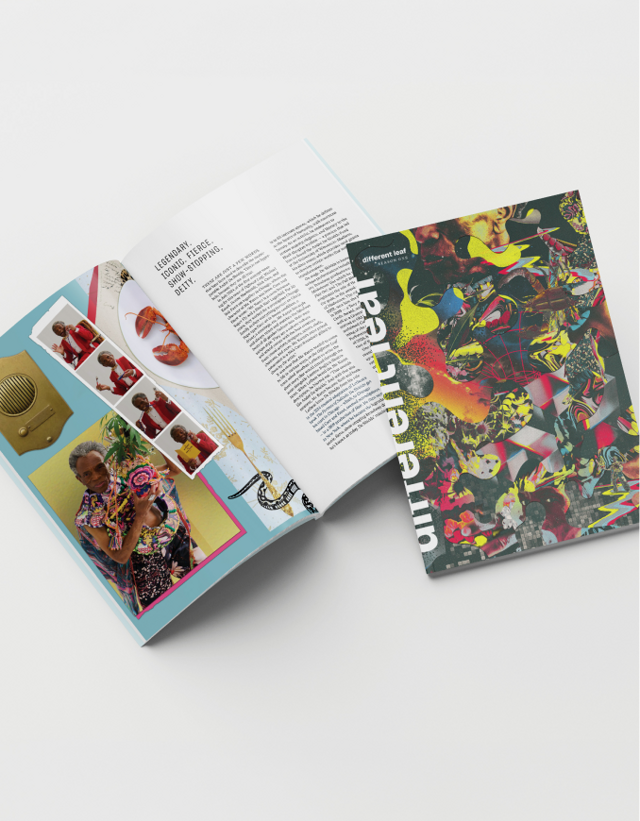
The curators and editors of the new issue of Different Leaf were thrilled to collaborate with author Jonathan Lethem on a piece of fiction that winds its way through the print edition. His inspiration came from early conversations about the project in which issue curators Nick Cave and Bob Faust described a character they invented called Mr. Karen — in brief, “a black Karl Lagerfeld” — who Lethem thought sounded like actor André De Shields. The issue creators reached out to De Shields and asked him to model fashions designed by Cave (along with outfits chosen by the stylist, Angel Emmanuel, in turn inspired by the description of Mr. Karen).
The resulting photos brought Mr. Karen to life, and Lethem used them to flesh out details of the interstitial story that introduces each feature in print. We spoke with Lethem about the collaboration, his current media obsessions, cannabis, and his newest book, A Different Kind of Tension.
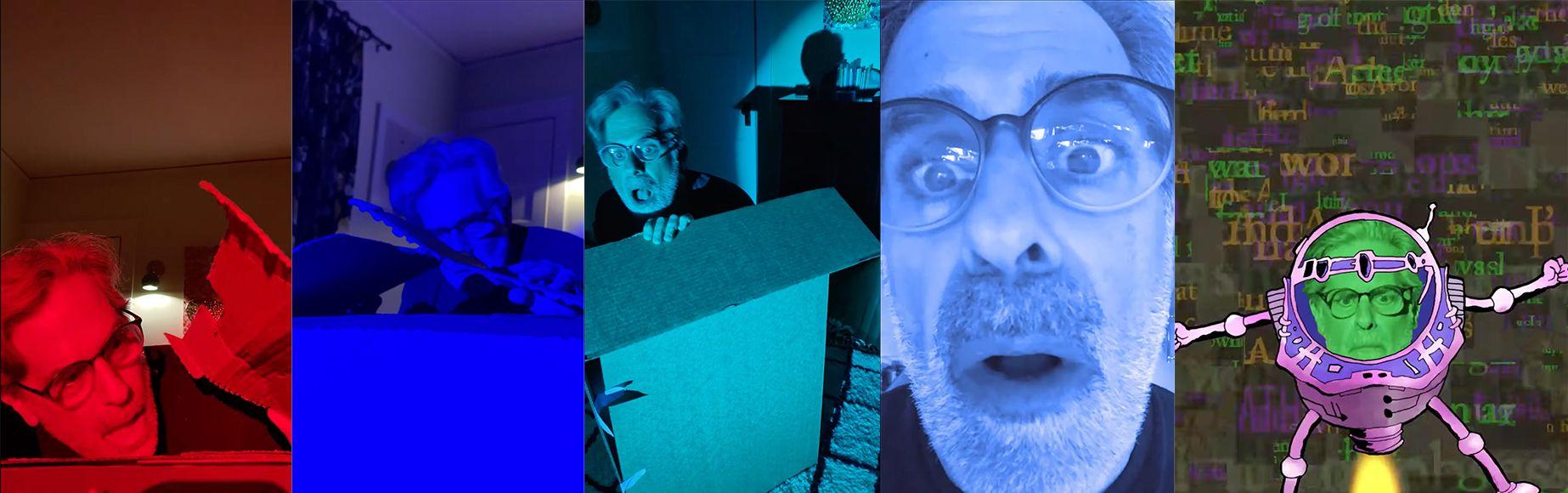
Collage by Debbie Way with images courtesy of Jonathan Lethem.
DL: How did you get involved in this project for Different Leaf?
Jonathan Lethem: I got to know [Madison Square Park curator and curator of this issue] Denise Markonish in the last few years, and she was my route into this collaboration. I got to know her through artist friends and immediately we became interested in my tendency to collaborate with visual artists. Around that time it had begun to reach a kind of a critical mass with the [2024] book that I put together, Cellophane Bricks, which is a compendium of all my different writings in response to, or in collaboration with, either pieces of visual art or with living visual artists. There were a lot of those — I've been doing it for a long time — and Denise was really compelled by this. I ended up having the launch of that book be at Mass MoCA with a small pop-up exhibition of a few of the artworks involved, and with a conversation with Denise. So we had begun this really interesting friendship around the idea of writers collaborating with artists. Having done that, she turned to me and said, ‘So, have you heard of Nick Cave, and would you be interested in hearing about this possible writing opportunity?’
DL: Are you familiar with Nick Cave's work?
JL: I've been exploring him online and realizing what an awesome amount of stuff I have to catch up with. I’m eager to have more occasions where I could see it in person. I'm a huge fan. I mean, the whole [collaboration] has been very much a kind of a love-in, because I drew their attention to André De Shields, and now André De Shields has been photographed in Nick's outfits. So it's been almost a kind of exquisite corpse collaboration process. [Editor’s note: exquisite corpse is the name of a Surrealist story and image creation game.]
DL: Right! Can you describe how you got André De Shields involved in the project?
JL: I had the super great luck of having this inside track with him because he played, in superstar fashion, the character of Barrett Rude Sr. in The Public Theater's stage musical version of [my book] The Fortress of Solitude. As a kid, I'd seen him on stage as the Wizard of Oz in The Wiz, you know, so he was already rooted deeply in my imaginative space. And here he was doing my own character and ideas from my own writing on stage. He's an utterly inspiring and unique being, which is one of the reasons that I helped get him cast as Mr. Karen in the photo shoot. After I looked at those pictures, I thought, he's from outer space. I mean, no one had quite taken it to that degree, that Mr. Karen ought to be from outer space; but I realized André already struck me as somewhat extraterrestrial.
DL: So the photos really inspired that detail in your story.
JL: Absolutely, and it kind of grew and grew. That's why I say it was like an exquisite corpse, because until I saw André dressed as Nick dressed him, Mr. Karen was still an earthly being.
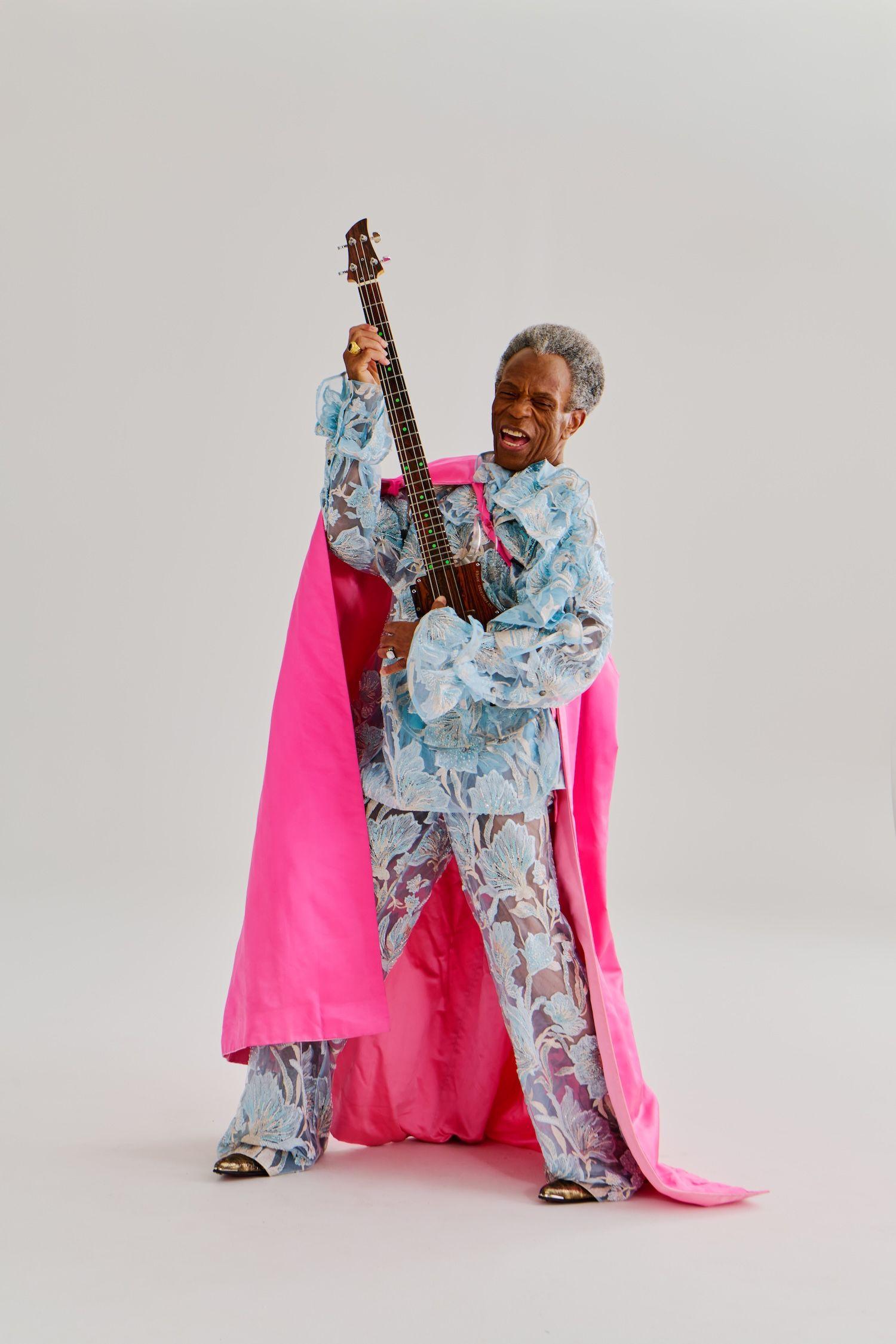
André De Shields photographed by Hunter Abrams & Sam Lee. Top and pants: Aknvas; Cape: Vintage; Shoes: Andre’s own.
DL: You've done collaborations like this before, as collected in Cellophane Bricks — although this is a little bit different. Can you talk about the challenges or the joys of collaborating with artists and influencers?
JL: This one was certainly its own creature because it wasn't so much just a reciprocal kind of a love affair of the images and the words. It involves kind of reaching out to glom onto and incorporate, like some sort of shape-shifting being or amoeba, these articles and the design. By design, I came in last and tried to weave my writing in and amidst all of the voices of the journalists and the musicians and the powerful suggestions about who Mr. Karen was. And then, you know, there’s the force field of André’s involvement. So yeah, I was trying to write something that was like awake to and aware of all of these other kinds of energies.
The track record I had with the Cellophane Bricks projects, all the collaborations with artists, they were all different too — each time it has to reinvent itself. It's not like that's a stable procedure. So, I had some experience that was relevant, but this was its own creature.
DL: Did you have any ideas about Mr. Karen before you saw the photos of André De Shields? Was there an evolution in how you saw him?
JL: I was trying to feel my way towards it, which is something I was doing out loud in group visits with the team, Bob Faust and Nick Cave and [publisher] Michael Kusek and Denise, and it was in that kind of laboratory of the visits — and that laughing, ’cause a lot of it was about joy. Listening to the existing riffs that Nick and Bob had about who Mr. Karen was caused me to make a visualization, and André De Shields kind of hovered into that field against my volition. Then the fact that we were able to actually magically bring him in … it was listening and waiting and feeling my way towards it, and then the photographs catalyzed everything.
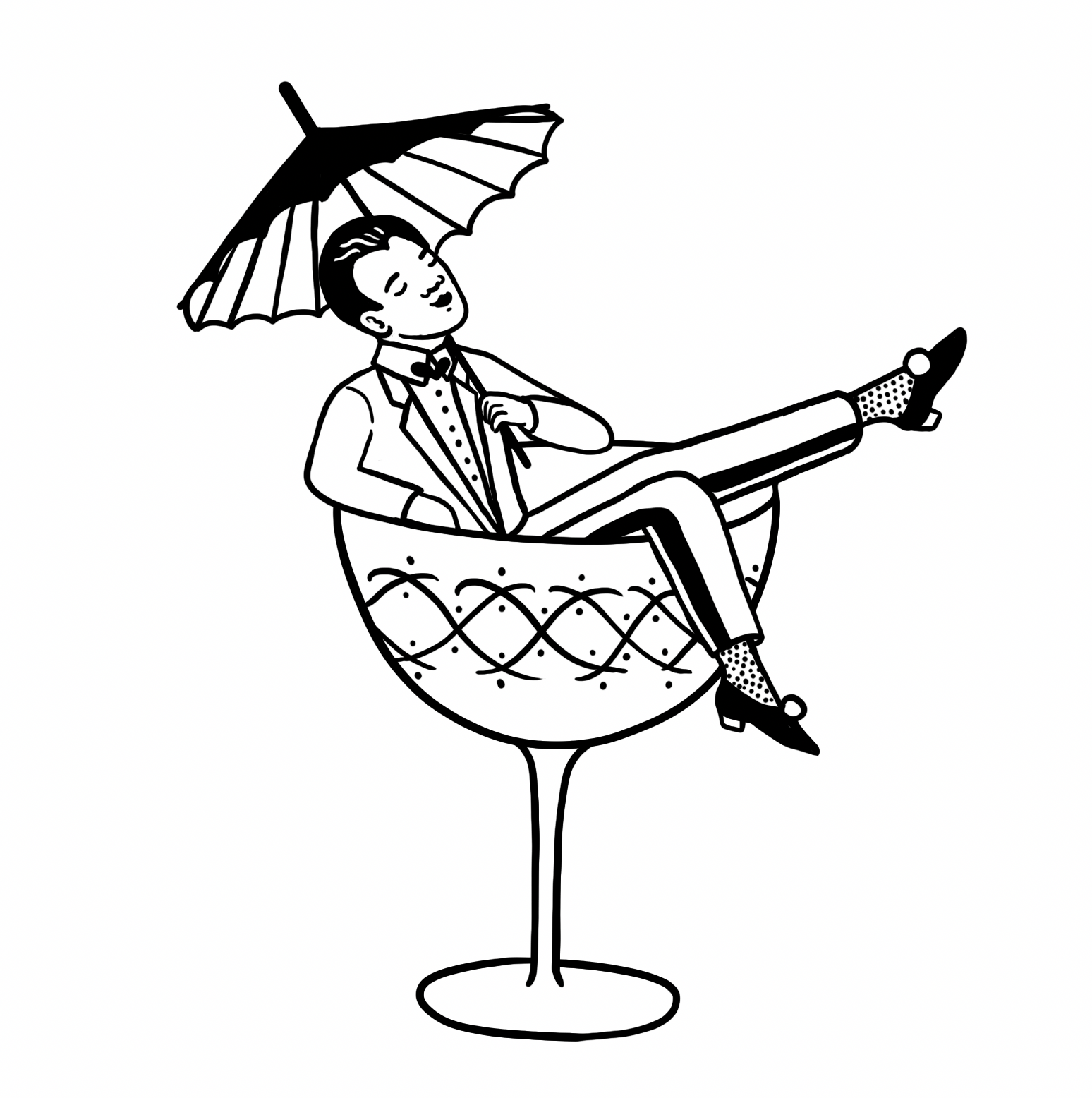
Mr. Karen illustrated by Laurène Boglio.
DL: Shifting gears, what's influencing you right now media-wise?
JL: I tend to be very asynchronous or a late adopter. I'm a creature of used bookstores and crate digging, so I'm always kind of in the archives as much as I'm in the present. I mean, last night I watched — well, no, last night I went to see Neil Young at the Hollywood Bowl. The night before that, I watched a German film by the director Maren Ade called The Forest for the Trees, and it was totally amazing. But I also have the blessing right now of having two teenagers who throw me into the world of their discoveries and their listening. I've been fortunate enough to have the band Drug Dealer suddenly presented to me, and I'm really crazy for them. And then the reverse — they get into my archival stuff and they remind me of things that I haven't thought of that I want to share with them. On our way to the Neil Young concert, my kid was saying, ‘What are some other things that are like Tribe Called Quest?’ And I said, ,’Have you ever heard of De La Soul?’ So we get a deep dive on Spotify in the car of De La Soul, and we're just totally going crazy with that.
So, I would say that I don't always have the breaking news. One of the things that's cool for me about working with people who are in the magazine realm is that they traffic in the brand new. I tend to traffic in the deep dive or crate digging or resurrections or revivals. I read a lot of old novels. I'm teaching a couple of novels right now that I'm crazy for: I Who Have Never Known Men by Jacqueline Hartman, and The Wall by Marlen Haushofer. Again, those are not brand new novels. In some congenital way, I'm allergic to the actually new.
DL: What do you teach?
JL: I call it “Impossible Novels.” Basically, I try specifically to teach books that are non-canonical, off the usual path, or so big and ungainly or strangely structured that they're tend to be thought of as impossible to teach — like [Julio] Cortazar’s Hopscotch or [Robert] Musil's The Man Without Qualities.
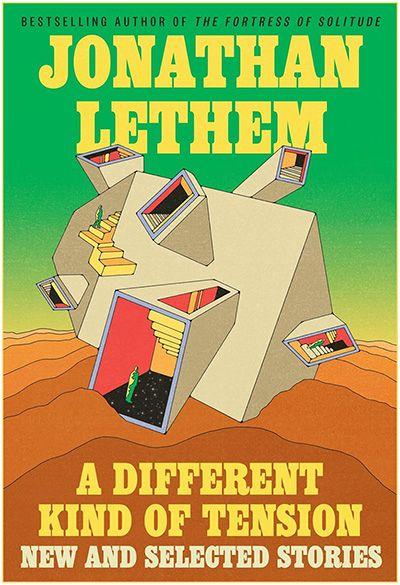
The cover of Lethem's new collection of short stories, designed by Kate Dehler.
DL: Our magazine touches upon the new culture of cannabis. Do you have a relationship with cannabis?
JL: I believe it goes pretty well with just about everything we've discussed to this point. Not a requirement, but a splendid amplifier of literature and music, film, magazines, books, records, fashion, photography, just about everything I've mentioned except driving. I'm a 60-year-old college professor and so I get to it less often than I did in my glorious youth. But I extended my glorious youth for a very long time. So I have definitely seen a lot of the world through that. Very simpatico for me.
DL: Could you describe your new book, A Different Kind of Tension?
JL: I just made my argument against the new, but this is kind of a book that's both new and old. It's a [collection of] new and selected short stories. So it's 35 years' worth of writing. Think of it kind of like a box set. It's got singles and B-sides and some demos and outtakes, and some brand new material so that it isn't all archival. It's a kind of secret autobiography, because to look at short stories I've written starting from the middle of my twenties to now, it forms a kind of holographic picture of my brain over all that time.
DL: Do you want to say a word about the cover design? I know that you’re interested in the artwork that your books inspire.
JL: I'm really crazy about this book jacket. It looks almost like it was designed in the mid-’70s. It sort of reminds me of Peter Max, and it looks like the psychedelic style that was being put into children's textbooks and things like Sesame Street or The Electric Company at that time. It's certainly a book that I would have picked up when I was a teenager — when books were like drugs to me. Each one that I discovered, each new author I fell in love with, totally transformed my brain. I was so soft and spongy back then. I wasn't indexing them according to anyone else's value system or reading reviews. I was just picking up these weird objects and letting them transform me. And this looks like the kind of book that I would have picked up as a teenager and had a very good time with.