11.19.2026
SEASON FALL 2026 | COLLECTION DIGITALCheck, Please
Check, Please
Nathan Frontiero
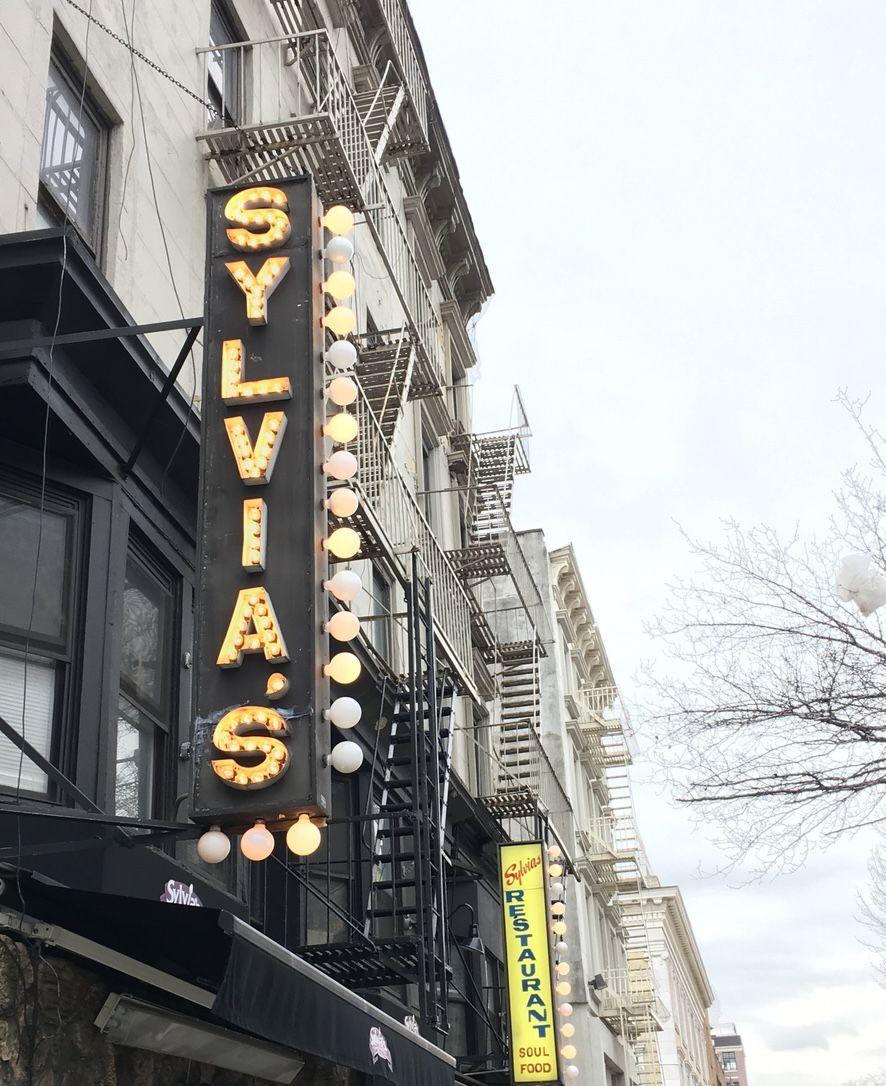
Legendary soul food restaurant Sylvia's, Harlem, New York. Photo by MDoculus/iStockPhoto.
From haute cuisine and fast casual to the ethnic and ersatz, American restaurants coalesce in their eclecticism.
American cuisine is, to some degree, a contradiction in terms.
One can find melting pots in restaurant kitchens around the country, to risk pushing the metaphor too strongly on the nose. But the overlapping tides of colonization, immigration, and urbanization in the United States have produced a dining culture whose most persistent feature may be its variety.
“The statement, ‘I don’t want to have Thai food tonight; I had it yesterday,’ or some variation thereof, is routine in the United States but strange, even senseless in most of the world, not only in Thailand,” writes Yale historian Paul Freedman in Ten Restaurants That Changed America.
“If we take a long historical view, we find that American taste has been molded by the country’s natural environment and the origins and traditions of the diverse people who settled it,” Freedman continues.
Among this national melange you’ll find the deep influence of French haute cuisine jostling with the evolving prestige and presentation of Italian and Asian dishes, the assimilation of German staples like the hamburger, the expansion of interest in spices, and the increased attention to the locality and quality of ingredients.
Fancy as in French
The restaurant as we understand it today didn’t emerge in earnest until the 1830s, with the opening of Delmonico’s in New York City. Dining out predates this period in America, but mostly in the form of taverns or inns, establishments not primarily focused on eating.

Highly influential restaurant, Delmonico's, in NYC. Photo by Wirestock/iStockPhoto.
“Delmonico’s is really the first successful restaurant as distinguished from a more rough-and-ready or practical oyster bar, tavern, or chophouse,” Freedman tells me over the phone. “Refinement is a good term.”
That refinement, as Freedman explains, is synonymous with French cooking, which “had defined the repertoire, vocabulary, and style of prestigious food” globally for three centuries.
“If you wanted to be upper class, if you wanted to be a fancy restaurant, it was French,” he says, a standard that lasted “the first 150 years of American restaurant history.”
Abundance and convenience
Whether dining out or stocking their own pantries, Americans “have had a couple of expectations always,” says Hannah Cutting-Jones, a social and cultural historian at the University of Oregon. “We want cheap food and we want abundant food.”
Cutting-Jones highlights key factors like industrialized food production, railroad refrigeration and the automobile, and government subsidies for farmers in increasing domestic food quantity — but not food equity.
“We have a lot of food, but it’s not equitable how it’s distributed,” Cutting-Jones says. “It’s not necessarily correlated with health.”
Howard Johnson’s popularized simpler franchised fare accessible via the highway system, but the likes of McDonald’s, Burger King, and Kentucky Fried Chicken streamlined and overtook that territory beginning in the 1960s.
“There were nicer restaurants that would have been out of reach for a lot of people, but there was always street food that other people could afford,” Cutting-Jones says. “And there were soup kitchens and cafeterias. But the real turning point in terms of affordable food would have been fast food.”
Behind the velvet rope
If you look to the sit-ins at Woolworth’s lunch counters or Howard Johnson’s during the Civil Rights Movement, or to other popular mid-20th century restaurants like Schrafft’s that offered a space for women to enjoy meals neither accompanied nor accosted by men, the large arc of American dining seems to bend toward a more welcoming present for all patrons. But one would be remiss to dichotomize restaurant history as exclusionary then and egalitarian now.
“The narrative that you often get is one of progressive democratization,” Freedman says. Although he offers the claim is partly true, he identifies a few contrasts to the notion of a utopian present for dining out.
“In the 21st century, it’s become extremely hard just to get a reservation at high-end restaurants,” he says. “They’re certainly democratic in the sense that they’re not discriminating against anybody. But if you’re talking about actual access, it’s harder now than it was in the 19th century.”
...one would be remiss to dichotomize restaurant history as exclusionary then and egalitarian now.


A grimly comic embodiment of the phenomenon Freedman references is Dorsia, a reservation app for highly desired restaurants. The platform takes its name from the fictional exclusive eatery Wall Street axeman Patrick Bateman pines after in American Psycho. Membership is subject to application approval and ranges from $175 per year for the basic subscription (a price set to increase) to $25,000 per year for the “premium plus” level. Members pre-pay a portion of their future bill to book a table at hot spots in New York and other major cities around the world — including, as it happens, the current incarnation of Delmonico’s.
“I think that some of the protestations of progress and democracy are hypocritical,” Freedman says. “The restaurant industry would have you believe that we’re in this magical age of open access, but actually try to get a reservation at the Ralph Lauren Polo Bar and see what happens.”
As Freedman points out, these are “peculiarly American forms of social exclusivity,” but they came to be associated with French restaurants in the mid-20th century, in part because of New York’s La Pavillon. Diners could find superb French cuisine at its Fifty-Fifth Street location, filtered through the tyrannical snobbery of owner and maître d’ Henri Soulé, who leaned hard into adjudicating status via an emerging tier system of desirable and undesirable seating.
Plate vs. place
As restaurants in America evolved, the purveyors of a given cuisine and its progenitors gradually diverged. Ubiquitous dishes like chop suey and chicken parm are somewhat estranged from the culinary traditions of China and Italy, for example.
Mamma Leone’s “pioneered the Italian restaurant for non-Italians,” Freedman writes, perfecting a histrionic kitsch that proved massively successful in the 20th century. The New York restaurant “served 4,000 people a night for decades.”
By contrast, the Mandarin of San Francisco exemplified high-end Chinese cuisine and “challenged American stereotypes of the Chinese American,” Freedman writes, with resplendent interiors and offerings such as Peking duck, shark-fin soup, and prawns in Szechuan sauce.
While so-called ethnic restaurants historically offered an economic and cultural entry point for many immigrant communities in the United States, today their personnel and provisions don’t necessarily align.
“Immigrants form a majority of restaurant workers,” Freedman says, but a given eatery’s staff and its menu now “depends on what’s popular and who’s available.” He references the frequency of Indian restaurants with Pakistani or Bangladeshi founders, Italian restaurants run by Croatians or Albanians, and Japanese restaurants with Chinese leadership.
This seeming disconnect actually has deep roots in American dining culture.
“Immigrants are not necessarily people who grew up with a love of cooking and the love of their native cuisine,” Freedman says. “And that goes back to Delmonico’s. The Delmonico brothers were from the Swiss-Italian canton of Ticino, and yet their restaurant was French.”
As Cutting-Jones points out, the fluidity of certain cuisines also reflects their fraught histories. A Tex-Mex staple like the burrito includes flour, meat, and dairy, “all of these things introduced by colonizing forces like the Spanish.”
Soul food is “contested,” Cutting-Jones says, pointing to its connection with enslavement. In writing about the Harlem restaurant Sylvia’s, whose owner Sylvia Woods self-described as “the Queen of Soul Food,” Freedman also notes the term is “now somewhat passé” for a cuisine that “was the result of West African, Western European, and Native American cooking practices.”
A fresh step forward
Today, interest in food quality and provenance is so prevalent as to be worthy of parody, which Freedman notes is a marked shift from American convention.
“Until recently, it was considered un-American to fuss about food — to talk about it, to encourage culinary traditions or innovations, or even to linger at the table,” he writes.
“Above or beneath the waves of fad and change appear some very basic American facts,” Freedman continues. “The appetite for change itself, a love of experimentation, a preference for variety over canonical dishes and preparations, and eclectic, if not omnivorous, interests in foreign cuisine.”
Despite the considerable gamble of opening a restaurant...the restaurant industry remains one of unshakeable gumption.
In the 1970s — amid “mass-produced supermarket products or unpalatable health food” Freedman writes — Chez Panisse in Berkeley, California offered a third way.
Transforming from French into what we would now call New American, Alice Waters’ menu at Chez Panisse epitomized the farm-to-table precepts of fresh, local, in-season ingredients. Her approach to cuisine comes not just from prioritizing taste, but also out of a passionate interest in food as a catalyst for social change.
“Her specific agenda has shifted from sweeping political transformation in the 1970s to protecting small farms and then to advancing sustainable agriculture, radically improving what children eat in school, and attacking global warming,” Freedman writes.
One can argue there’s considerable optimism not just in locavore cuisine but across restauranteurs writ large. Despite the considerable gamble of opening a restaurant — startup costs and failure rates are high, even when discounting the occasional global health emergency — the restaurant industry remains one of unshakeable gumption. It’s also a field that’s resistant to consolidation.
“If you set aside fast food or fast casual, restaurants are very individualized compared to other things,” Freedman says. “There’s a constant proliferation of them.”
Where American restaurants go from here, however, is a question best pondered in a welcoming atmosphere with an appetizer.